
A few years ago, you could get a dedicated server for under $100/month. Those days are mostly over. The hardware in those bargain servers was already old when it was cheap, and the providers offering them were cutting every corner: refurbished parts, no redundancy, slow support, and data centers that were barely more than a warehouse with cooling.
Today the hosting market has split: VPS hosting covers the low-to-mid range better than cheap bare metal ever did, and modern dedicated servers serve the high end with hardware that’s actually worth paying for.
When VPS hosting is the better choice
For most workloads under 32 GB RAM, a Linux VPS or Windows VPS gives you more flexibility than a budget dedicated server ever did. You get guaranteed CPU and RAM on modern Xeon hardware, SSD storage backed by Ceph, and the ability to scale up or down without swapping physical machines.
A VPS is better for web hosting, development environments, staging servers, small to medium applications, and anything where you want to deploy fast and not worry about hardware failures. If a hypervisor has a problem, your virtual server can be migrated to another host automatically. With a cheap dedicated server, a hardware failure meant hours or days of downtime while someone replaced a drive or motherboard.
Pricing starts at a few dollars per month for a small VPS, which is far less than even the cheapest dedicated server, with better hardware underneath.
When you need a dedicated server
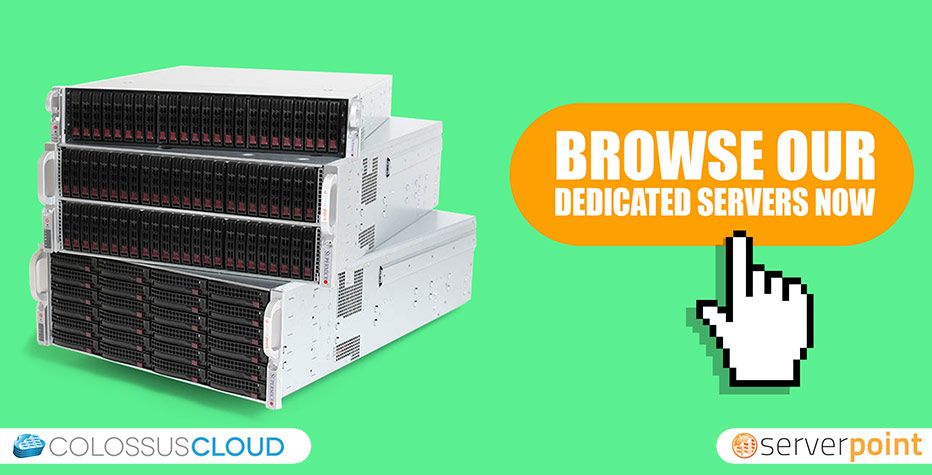
When your workload outgrows VPS or you need full control of the hardware, a bare metal dedicated server is the right move. Our current lineup starts at 64 GB RAM with Intel Xeon Scalable CPUs, Samsung SSD or NVMe storage, and optional dual 10 gigabit networking. These aren’t recycled desktops in a rack; they’re enterprise-grade machines built for sustained workloads.
Use cases where a dedicated server makes sense: large databases, high-traffic applications, compliance requirements that prohibit shared infrastructure, game servers, rendering, machine learning, or any workload where you need consistent bare metal performance without a hypervisor layer.
We can configure dedicated servers with up to 768 GB RAM, large SSD arrays in RAID, and 20 Gbps private networking. The same configuration on a major public cloud would cost significantly more per month.
How to decide
The decision usually comes down to workload size and budget. If you’re spending under $50/month and don’t need bare metal, VPS hosting is almost always the right call. If you’re spending $100+ and need dedicated resources, full root access to hardware, or specific CPU features, look at our dedicated server options. And if you’re not sure, contact our sales team and we’ll help you figure out which makes sense for your project.